
Copyright © 2025 AppsMinder. All rights reserved.
Copyright © 2025 AppsMinder. All rights reserved.
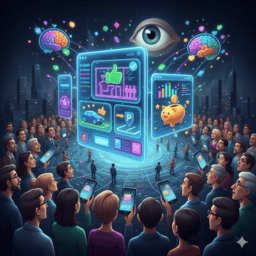
In today’s digital world, users increasingly rely on app recommendations to make decisions—what apartment to rent, which parking spot to choose, or which financial tool to use. Unlike traditional advertising, app recommendations feel neutral, data-driven, and personalized. This perception is rooted deeply in human psychology.
Users tend to trust apps because algorithms are perceived as objective. Unlike salespeople, apps appear to have no personal agenda. When an app suggests a “best option” based on location, price, or behavior patterns, users interpret it as factual rather than persuasive.
When an app remembers preferences—budget limits, commute times, or past behavior—it creates a sense of familiarity. Psychological studies show that people trust systems that “understand” them. This emotional resonance makes users more likely to follow recommendations without question.
Ratings, reviews, and “popular choice” labels act as modern social proof. Seeing thousands of users validate an option reduces perceived risk and speeds up decision-making.
While app recommendations are useful, blind trust can lead to suboptimal outcomes. Algorithms optimize for engagement and conversions—not necessarily the user’s long-term interests.
Trust in app recommendations is not accidental—it is carefully engineered through psychology, design, and data. Awareness allows users to benefit from guidance without surrendering autonomy.
ALL RIGHTS RESERVED AppsMinder.com 2025